2018-2019 BBA Marketing Seminar
| Date | Time | Room | Speaker | Affiliation | Synopsis | Paper |
|---|---|---|---|---|---|---|
11/28/2018 | 6:00PM to 7:00PM | Grainger 1310: Plenary Room | See Synopsis | Pending | ||
| 04/23/2019 | 6:00PM to 7:00PM | Grainger 1310: Plenary Room | Evan Polman | Wisconsin School of Business, University of Wisconsin-Madison | See Synopsis | Pending |
Anchor
...
isisag-anil isisag-anil
| isisag-anil | |
| isisag-anil |
...
Mobile Dating Apps and the Gamification of Entrepreneurialized Romance
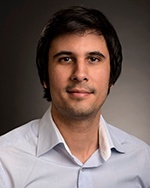 Anil Isisag, Doctoral Student, Wisconsin School of Business, University of Wisconsin-Madison
...
As a second project based on the same data set, I investigate the positioning wars in the mobile dating apps market by focusing on how Bumble and Hinge utilize Tinder's bad reputation in their own branding efforts. Capitalizing on Tinder's image as a platform that fosters a sexist hook-up culture, Bumble ("the feminist app") and Hinge ("the relationship app") carved out unique market positions by presenting their brand as a remedy to Tinder's shortcomings. By explicating the process through which they make use of defamatory messages about Tinder to create their own branding story, I offer a step-by-step framework that marketing professionals can utilize in similar markets where emotional branding prevails.
| Anchor | ||||
|---|---|---|---|---|
|
 Evan Polman, Professor, Wisconsin School of Business, University of Wisconsin-Madison
Synopsis
How people choose gifts is a widely-studied topic. However, what happens after people choose gifts is largely understudied. In three experiments, we show that giving a gift has unintended consequences, by altering how givers behave with recipients. Consistent with moral licensing, we find that gift-giving negatively affects givers’ subsequent, interpersonal behavior with the recipients of their gifts. In Study 1, we find that giving a gift to one’s romantic partner changes givers’ interpretation of which behaviors constitute as infidelity. We find that after giving their partner a gift, givers classify behaviors (e.g., dancing with someone other than their partner) less as cheating on their partner. In Study 2, we examined how friendly participants behave when they deliver a bad-news message to a friend. Using LIWC content analysis, we find that after giving their friend a gift, givers wrote a significantly less warm/friendly message to their friend. In Study 3, we tested real gifts that people give others, and found givers subsequently made more selfish decisions at their gift-recipients’ expense. In all, our research challenges the oft-cited axiomatic assumption that gift-giving strengthens relationships; and illuminates the potential for future research to examine the effects of consumer behavior on altering interpersonal/romantic relationships.
2018-2019 Marketing Seminar
Date | Time | Room | Speaker | Affiliation | Synopsis | Paper | ||||
|---|---|---|---|---|---|---|---|---|---|---|
11/09/2018 | 9:00AM to 10:30AM | Grainger 4151 | Melanie Wallendorf | See Synopsis | ||||||
| 02/08/2019 | 9:00AM to 10:30AM | Grainger 4151 | Avi Goldfarb | Rotman School of Management, University of Toronto | See Synopsis | Understanding the Impact of Artificial Intelligence | ||||
| 02/22/2019 | 9:00AM to 10:30AM | Grainger 4151 | Robert Zeithammer | Anderson School of Management, University of California - Los Angeles | See Synopsis | Paying for a Chance to Save Money: Two-Part Tariffs in Name-Your-Own-Price Markets | 04/26/2019 | 9:00AM to 10:30AM | Grainger 4151 | Ravi Dhar |
| Yale School of Management, Yale University | See Synopsis | Pending | 05/03/2019 | 9:00AM to 10:30AM | Grainger 4151 | Paul Piff | School of Social Ecology, University of California - Irvine | See SynopsisPending | What is Social About Social Class? |
Anchor #wallendorf #wallendorf
Consumer Claims to Space in the Politics of Consumer Identity
| #wallendorf | |
| #wallendorf |
...
Prior theoretical research has shown that a Name-Your-Own-Price (NYOP) seller can profit from charging each prospective buyer a non-refundable fee for the opportunity to place a bid, akin to an entry fee to the seller’s store. We examine the profitability of such two-part tariffs in NYOP markets using incentive-compatible laboratory experiments. Overall, our results suggest two-part tariffs increase NYOP profit in a standard information-poor setting in the short run, but they are not as profitable as theory would suggest when the bidders get more information or experience. We also propose an individual-level non parametric test of the risk-averse expected utility model, and the test results suggest that this canonical model for decision making under uncertainty is not a good fit to the behavior of a substantial proportion of our subjects.
Anchor piff-paul piff-paul
What is Social About Social Class?
| piff-paul | |
| piff-paul |
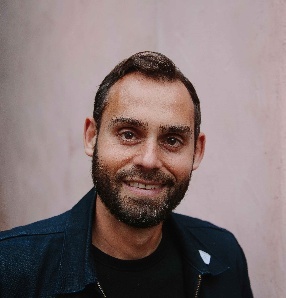 Paul Piff, Professor, Department of Psychological Science, University of California Irvine
Synopsis
What is social about social class? How does money shape the mind, how people think about themselves and behave toward others? This talk will highlight the emerging psychological science of social class. I will describe studies showing that social class exerts a pervasive influence on the social realm, critically shaping emotions, morality, social relationships, materialism, and consumption.
2018 Marketing Camp
The Wisconsin School of Business’ Marketing Department hosts an annual Marketing Camp that invites guest speakers from all around the globe to present their research. The objective of the Camp is to network, share research, studies, and findings regarding the ever-changing marketing landscape. The marketing landscape is continuously evolving due to technological advancements and the multifaceted human population. We believe that in this day and age marketing research has never been more imperative. The focus of our marketing research is to help us gain key insights on marketing analytics and big data, consumer culture theory, and consumer behavior. A big part of this research involves bringing in new ideas from our fellow peers in the world of academia. As such, we have invited these four guest speakers below to share with us some of the research that they have been working on.
...